How to Store Keycaps and Switches Properly
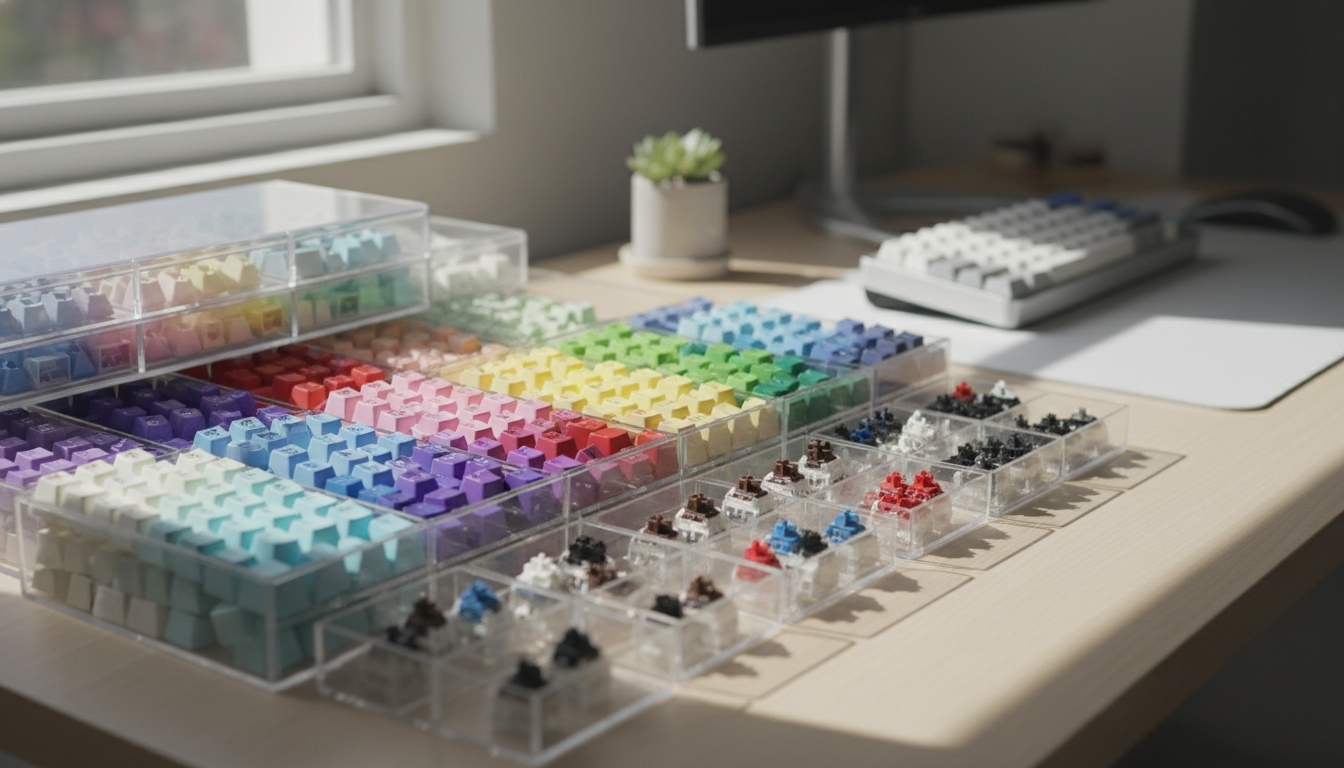
Keycaps crack, legends fade, and switches corrode when stored carelessly. The right containers and conditions keep your collection in build-ready condition for years — here’s exactly how to do it.
The two main risks to address first
Humidity is the primary enemy of switches. Moisture accelerates oxidation on metal contacts and causes housing plastics to swell slightly, which can affect tactile feel. Keycaps face a different threat: UV exposure yellows PBT over time and can shift dye-sublimated legends on cheaper sets.
Physical damage is the second concern. Loose keycaps rattling against each other chip legends and scratch surfaces. Switches stored in bulk bags pick up debris that contaminates lubricant.
Best containers for keycap sets
The gold standard is a hard-shell case with individual compartments. These prevent cap-on-cap contact entirely. The Enhance Storage Case is a common entry point — it has customizable foam dividers and fits a full 104-key set plus extras.
For budget storage, Really Useful Boxes (the small 0.14-liter size) nest keycaps cleanly and stack. They’re airtight enough to slow humidity exchange and cost well under $2 per unit. Many collectors keep modifier sets in one box, alphas in another.
The original packaging from a group buy is underrated. If you have the tray insert a set shipped with, use it — it’s custom-molded for those exact caps. Store the sealed box inside a larger bin with silica gel packets and you’re done.
What to avoid:
- Zip-lock bags long-term (caps shift and contact constantly)
- Cardboard boxes without lining (absorbs and releases humidity)
- Clear acrylic displays near windows (UV exposure)
Best containers for switches
Switches tolerate bulk storage better than keycaps, but lubed switches are sensitive to debris. A tackle box with small compartments works well — the Plano 3700 series is a hobbyist favorite. Dividers keep different switch models separated, and the latching lid is secure enough to toss in a bag.
For lubed switches specifically, store them stem-up in the housing to keep lube distributed where it matters. Some builders use small plastic bins with lids from hardware stores, one model per bin, labeled on the outside.
If you’re sorting a large collection (50+ switches of multiple types), a parts organizer cabinet with pull-out drawers keeps things searchable. Label every drawer. The Akro-Mils 44-drawer cabinet handles this at a reasonable price and mounts to a wall if bench space is limited.
Humidity and temperature control
Target 40–50% relative humidity for both keycaps and switches. Below 30% and some plastics become brittle over long periods. Above 60% and you’re inviting oxidation on switch contacts and spring rust.
Silica gel packets solve this cheaply. Toss 2–3 packets per storage bin and recharge them in an oven (250°F for 2 hours) every few months. Color-indicating packets turn pink when saturated, so you always know when to recharge.
Temperature matters less than humidity, but avoid attics and garages with wide seasonal swings. A closet shelf inside your living space is fine. Consistent, moderate conditions beat any fancy container.
Labeling and cataloging
This step gets skipped until you have 15 sets and can’t remember what’s in the third bin from the left. Label everything before you need to search.
For keycaps: include set name, colorway, and what extras are in the box. A strip of masking tape and a marker works. A label maker is nicer.
For switches: note the model, weight (spring), lube used, and quantity. Switches you’ve lubed and filmed deserve their own labeled container separate from stock switches.
A simple spreadsheet — set name, container, condition, any missing keys — takes 20 minutes to build and saves hours of digging later. Take photos of every set before closing it up.
When to use display vs. closed storage
Open display looks good and gives quick access to frequently used sets. It also means continuous dust accumulation and UV exposure. Reserve display for caps on boards you use daily, not collector pieces or limited runs.
For anything you won’t touch for more than a few weeks: closed container, silica gel, dark shelf. That’s the default. Display is the exception.
Bottom line: A sealed container, a few silica gel packets, and a label gets you 90% of the way there. Spend money on better containers only if you’re managing a large collection — otherwise a $3 Really Useful Box does the job as well as anything.