Best Custom Mechanical Keyboard Kits in 2026
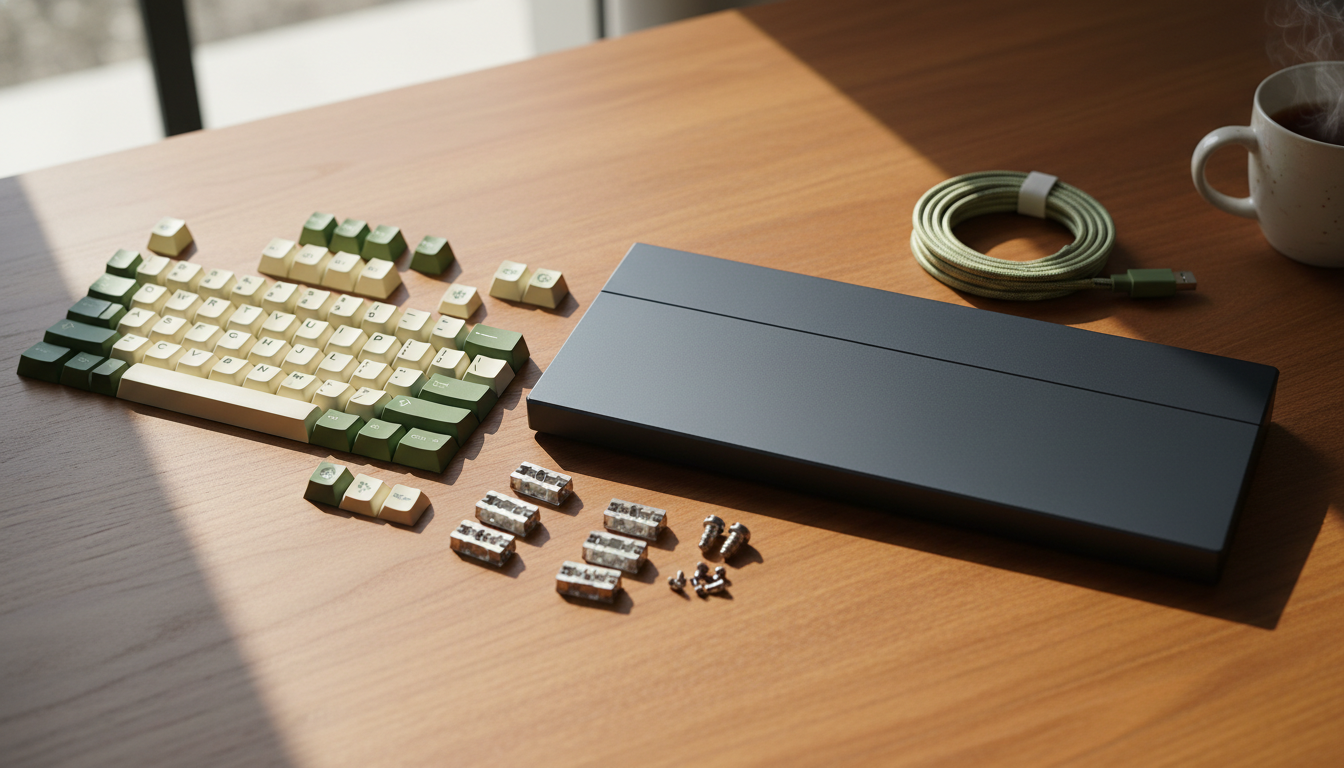
The keyword “best custom mechanical keyboard kit” signals one thing: you want to build, not just buy. This guide cuts through the noise and names specific kits worth your money across budget tiers — from first builds to enthusiast-grade boards.
What Makes a Kit Worth Building
A good kit ships with a case, PCB, and plate at minimum. The better ones include stabilizers, a daughterboard, and proper gasket or foam dampening. What you’re really paying for is PCB quality, mounting style, and case material — everything else is cosmetic.
Hotswap PCBs are worth the premium for beginners. Soldering is a skill; hotswap lets you focus on tuning sound and feel first without committing to a switch permanently.
Mounting style shapes typing feel more than almost anything else. Top-mount is stiff and clacky. Gasket-mount is bouncy and forgiving. Tray-mount is budget-tier and best avoided unless the price is exceptional.
Best Budget Kit: Keychron Q1 Pro
The Keychron Q1 Pro sits around $200 and delivers an aluminum case, gasket mount, and a hotswap PCB in one box. That’s a combination that used to cost twice as much.
Sound dampening foam is pre-installed. The stabilizers ship lubed from the factory — not perfectly, but good enough to skip a full teardown your first time. It’s one of the few kits where you can install switches, plug it in, and actually enjoy the result without hours of extra work.
Available in 75% and full-size layouts. The 75% is the better pick: compact without sacrificing the function row or arrow keys.
Best Mid-Range Kit: KBDfans KBD75 v3
KBDfans KBD75 v3 runs roughly $150–$180 depending on color and configuration. It’s a 75% layout with a solid brass weight, per-key RGB, and a hotswap PCB option. The case is CNC aluminum, and the typing angle is a comfortable 7 degrees.
This kit rewards a bit more effort. The stock stabilizers benefit from a relube, and the sound profile opens up considerably once you add a PE foam layer or tempest mod. Think of it as a tuner’s board — decent out of the box, excellent after an hour of work.
KBDfans also ships internationally with reasonable lead times, which matters when you’re comparing against group-buy alternatives that can take 12+ months.
Best Enthusiast Kit: Mode Envoy
The Mode Envoy is the step into serious enthusiast territory. It uses a top-mount structure with a flex-cut PCB that mimics some of the bounce of gasket designs while keeping a more precise, consistent feel.
Mode ships with better-than-average stabilizers and thoughtful weight options. The layout is 65%, which is the sweet spot for most daily drivers — no function row, but full arrow cluster and a few navigation keys intact.
Expect to pay $250–$350 depending on configuration. It’s not cheap, but it’s a kit you won’t want to replace. Build it once, tune it to your preferences, and it becomes a reference point for everything else.
Best Beginner Kit for Tight Budgets: Epomaker TH80 Pro
If $200 is too steep, the Epomaker TH80 Pro lands under $100 and still offers a gasket-mount design, hotswap PCB, and south-facing RGB. The case is polycarbonate rather than aluminum, which softens the sound in ways that actually suit the budget tier.
The 75% layout works well. Stock stabilizers are mediocre — budget 20 minutes to relube them with Krytox 205g0 and the board transforms. Epomaker’s QC has improved noticeably over the past two years; dead keys on arrival are rare now.
This is the kit to recommend to someone who wants to understand custom keyboards without a painful first investment.
What to Pair With Your Kit
Switches and keycaps are sold separately in nearly every kit. A few reliable starting points:
- Switches: Gateron G Pro 3.0 (linears), Akko CS Lavender Purple (tactiles), or Gateron Yellow (budget linear)
- Keycaps: GMK Clone sets from vendors like Epomaker or NuPhy offer good legends and PBT construction under $40
- Lube: Krytox 205g0 for linears, Tribosys 3203 for tactiles — buy once, use across multiple builds
Don’t buy expensive switches until you know whether you prefer linear, tactile, or clicky. Most kits support standard MX-compatible footprints, so switching later costs nothing but the switches themselves.
Bottom Line
Start with the Keychron Q1 Pro if you want the least friction between “kit arrives” and “board you enjoy typing on.” Step up to the KBDfans KBD75 v3 if you enjoy the tuning process. The Mode Envoy is the right call when you’re ready to stop experimenting and commit to a board you’ll keep.